
red team evaluation conducted
Organizations face increasingly sophisticated cyber threats that can bypass traditional security measures and exploit weaknesses across technology, people, and business processes. To better understand their actual security posture, many businesses rely on a red team evaluation to simulate realistic attacks against their environment. Unlike standard vulnerability assessments or penetration tests, a red team evaluation focuses on mimicking the behavior of determined adversaries who attempt to achieve specific objectives while remaining undetected. This approach provides organizations with valuable insights into how effectively their defenses perform under real-world conditions. Understanding how a red team evaluation is conducted helps organizations prepare for the process and maximize the benefits of this comprehensive security assessment.
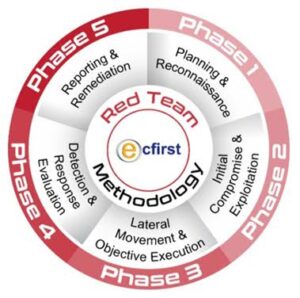
Every red team evaluation begins with careful planning and preparation. Before any testing takes place, security professionals work closely with organizational stakeholders to define the purpose of the assessment. Some organizations want to evaluate their ability to detect advanced threats, while others aim to test the security of sensitive data, cloud environments, critical applications, or employee awareness. Clearly defined objectives ensure that the exercise focuses on meaningful business risks rather than simply identifying technical vulnerabilities. During this stage, the scope of the evaluation, authorized testing methods, timelines, communication procedures, and rules of engagement are also established to ensure the assessment remains controlled and safe.
Once planning is complete, the next phase of a red team evaluation involves reconnaissance. Similar to real-world attackers, the assessment team gathers as much information as possible about the target organization before attempting any direct attacks. This may include researching publicly available information, identifying internet-facing systems, reviewing social media profiles, examining company websites, analyzing domain registrations, and studying organizational structures. The objective of reconnaissance is to understand potential attack surfaces and identify opportunities that could be exploited without immediately alerting defenders. This intelligence allows the assessment team to create realistic attack strategies based on the organization’s actual environment.
After gathering sufficient information, the red team evaluation moves into the initial access phase. At this stage, the assessment team attempts to gain entry using techniques commonly employed by cybercriminals and advanced threat groups. These methods may include phishing emails, credential attacks, exploiting vulnerable applications, targeting remote access services, or using social engineering techniques to persuade employees into revealing sensitive information. Rather than relying on automated tools alone, security professionals carefully select attack methods that reflect realistic adversary behavior. Successfully obtaining initial access allows the evaluation to continue into more advanced stages of the assessment.
How is a red team evaluation conducted?
Once inside the environment, a red team evaluation focuses on establishing persistence while minimizing the likelihood of detection. Sophisticated attackers rarely accomplish their objectives immediately after gaining access. Instead, they often create mechanisms that allow them to maintain access even if certain accounts or systems are secured. During the evaluation, the assessment team may test whether existing security controls can identify unauthorized persistence techniques, suspicious authentication attempts, or unusual system modifications. This phase helps organizations determine whether their monitoring capabilities are effective against stealthy threats.
Privilege escalation is another important component of a red team evaluation. After obtaining limited access, attackers often seek higher-level permissions that provide broader control over systems and sensitive information. Security professionals evaluate whether weaknesses in identity management, misconfigured permissions, outdated software, or credential storage practices allow attackers to obtain administrative privileges. Successfully escalating privileges demonstrates how seemingly minor vulnerabilities can combine to create significant organizational risk. The findings help organizations strengthen access controls and improve credential management practices.
Lateral movement represents another critical phase of a red team evaluation because attackers rarely limit themselves to a single compromised system. Once elevated privileges have been obtained, the assessment team attempts to move across networks, access additional systems, and identify valuable assets while avoiding detection. This process evaluates network segmentation, endpoint security, internal monitoring, and authentication controls. If attackers can move freely throughout the environment, the organization gains valuable insight into weaknesses that require immediate attention to prevent large-scale compromises.
A major objective of a red team evaluation is testing how effectively security teams detect and respond to suspicious activity. Throughout the engagement, the assessment team deliberately performs actions that should trigger security alerts while also attempting to evade defensive technologies. Security operations personnel typically respond as they would during an actual cyberattack without knowing the specific techniques being used. Evaluators observe how quickly threats are detected, how accurately incidents are investigated, how effectively compromised systems are contained, and how well communication occurs among response teams. These observations provide valuable information that extends beyond technical vulnerabilities to include operational readiness.
Many organizations also include social engineering during a red team evaluation because employees remain one of the most targeted attack vectors. Simulated phishing campaigns, fraudulent phone calls, impersonation attempts, and physical access tests measure whether staff members recognize suspicious behavior and follow established security procedures. The purpose is not to blame individuals but to evaluate organizational awareness and identify opportunities for improving employee training. Human-focused testing often reveals security weaknesses that technology alone cannot address.
Cloud infrastructure, business applications, and third-party integrations may also be assessed during a red team evaluation depending on the organization’s objectives. Security professionals evaluate cloud configurations, application security, identity services, remote access mechanisms, and vendor connections to determine whether attackers can exploit weaknesses across interconnected environments. Modern organizations rely heavily on cloud platforms and external service providers, making these assets important components of comprehensive security assessments.
After active testing has been completed, the red team evaluation concludes with detailed reporting and analysis. Security professionals document every stage of the attack simulation, including successful techniques, attempted exploits, detection timelines, response effectiveness, and identified vulnerabilities. Rather than simply listing technical findings, the report explains how attackers achieved their objectives and outlines practical recommendations for reducing future risk. Security leaders use these findings to prioritize remediation efforts, improve monitoring capabilities, strengthen incident response procedures, and enhance employee awareness programs.
A red team evaluation is far more than a traditional security test because it measures how an organization performs against realistic attack scenarios from beginning to end. By combining reconnaissance, initial access, privilege escalation, lateral movement, social engineering, detection testing, and comprehensive reporting, the evaluation provides a complete picture of organizational resilience. The insights gained enable businesses to address hidden security gaps, improve defensive strategies, and strengthen their ability to detect and respond to advanced cyber threats. As cybersecurity challenges continue to evolve, conducting a regular red team evaluation helps organizations remain prepared for the increasingly sophisticated tactics used by modern adversaries while protecting their most valuable assets.